Home
A Sad Child

A Sad Child

A Sad Child by Margaret Atwood

You're sad because you're sad.
It's psychic. It's the age. It's chemical.
Go see a shrink or take a pill,
or hug your sadness like an eyeless doll
you need to sleep.

Well, all children are sad
but some get over it.
Count your blessings. Better than that,
buy a hat. Buy a coat or pet.
Take up dancing to forget.

Forget what?
Your sadness, your shadow,
whatever it was that was done to you
the day of the lawn party
when you came inside flushed with the sun,
your mouth sulky with sugar,
in your new dress with the ribbon
and the ice-cream smear,
and said to yourself in the bathroom,
I am not the favorite child.

My darling, when it comes
right down to it
and the light fails and the fog rolls in
and you're trapped in your overturned body
under a blanket or burning car,

and the red flame is seeping out of you
and igniting the tarmac beside your head
or else the floor, or else the pillow,
none of us is;
or else we all are.

The Richest Man in Babylon

The Richest Man in Babylon

Self Help

The Richest Man in Babylon

The Richest Man in Babylon is a 1926 book by George S. Clason that dispenses financial advice through a collection of parables set 4,097 years earlier, in ancient Babylon

The Millionaire Next door

⭐ Overview / Summary

The Richest Man in Babylon is a classic personal finance book written by George S. Clason, first published in 1926. The book is not a historical document from ancient Babylon but a collection of modern parables set in that time to illustrate timeless financial principles. A timeless classic sharing personal finance lessons through ancient Babylonian parables. The book originated as a series of informational pamphlets, written by George S. Clason and distributed by banks and insurance companies, starting in 1926. These were later compiled into the complete book

💡 Key Points

  • “Pay yourself first.”

  • Live on less than you earn.

  • Seek advice from wise experts.

  • Multiply your wealth through investment.

🔍 Interesting Insight

Saving at least 10% of all income is the foundation of wealth building. The core message is that the laws governing the acquisition of wealth are universal and unchanging, as relevant today as they were when the book was first written

📚 Lessons Learned

  • Consistency and discipline are more valuable than complex strategies.

  • Financial wisdom is ancient and universal.

🎯 Who Should Read It?

Beginners, students, and anyone who loves story-based learning.


⭐ Rating:

⭐⭐⭐⭐⭐ (5/5)

More Books

2000 plus word search emeraldbookclub.org
2000 Plus Word Search

Embark on an exhilarating journey through the captivating world of words with "2000 Plus Large Vocabulary Word Search For Adults

Big A alphabet word search for adults emeraldbookclub.org
Big A Alphabet Word Search

Embark on a fascinating journey through the alphabet with "Alphabet Adventure: 2000 Words Starting with 'A

Mastering finance Word search for adults emerald book club
Mastering Finance Word Search

Delve into the intricate world of finance with "Mastering Finance: The Ultimate Word Search Book for Financial Enthusiasts

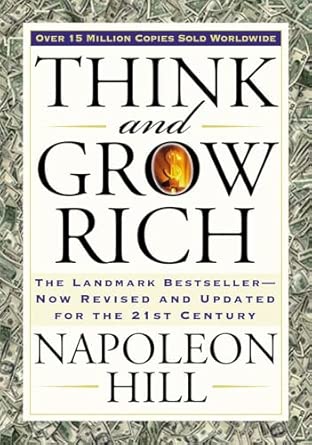
Think and Grow Rich

Think and Grow Rich

Self Help

Think and Grow Rich

Think and Grow Rich is a book written by Napoleon Hill and Rosa Lee Beeland released in 1937 and promoted as a personal development and self-improvement book.

The Millionaire Next door

⭐ Overview / Summary

Think and Grow Rich by Napoleon Hill is a classic self-help book that outlines a philosophy for personal achievement and financial success, focusing on the power of the mind and persistent effort. Originally published in 1937, it has since sold millions of copies worldwide and remains a cornerstone of modern motivational literatureBased on interviews with 500+ wealthy individuals, Hill outlines 13 principles of success, mixing mindset, discipline, and desire.

💡 Key Points

  • Desire is the starting point of wealth.

  • Thoughts become things.

  • Persistence is essential.

  • The mastermind principle accelerates success.

🔍 Interesting Insight

Hill’s concept of autosuggestion—repeating positive goals—became the basis for modern personal development.

📚 Lessons Learned

  • Set goals with burning desire.

  • Build a mastermind group.

  • Use faith and self-belief as tools for success.

🎯 Who Should Read It?

Entrepreneurs, dreamers, and people seeking personal transformation.


⭐ Rating:

⭐⭐⭐⭐⭐ (5/5)

The Key 13 Points
  • Desire: The starting point of all achievement is a strong, "burning" desire for a specific goal or outcome. Mere wishing for money will not bring riches.
  • Faith: An unwavering belief in one's ability to achieve the desired goal, acting as an antidote for failure.
  • Autosuggestion: Using positive self-talk and affirmations to reinforce beliefs and goals in the subconscious mind.
  • Specialized Knowledge: General knowledge is insufficient; organized and applied specialized knowledge is a crucial element for success.
  • Imagination: The ability to use the imagination to visualize goals and create concrete plans from abstract ideas.
  • Organized Planning: Developing a detailed, practical plan of action and putting it into motion.
  • Decision: Cultivating the ability to reach decisions promptly and definitely, and changing them slowly, a common trait among successful people.
  • Persistence: Maintaining persistent effort toward a goal, even in the face of obstacles and setbacks.
  • Power of the Master Mind: The coordination of knowledge and effort between two or more people who work toward a common purpose in a spirit of harmony.
  • The Mystery of Sex Transmutation: Channeling the powerful energy associated with the sexual drive into other creative and productive outlets.
  • The Subconscious Mind: The process of tapping into the power of the subconscious to help achieve goals.
  • The Brain: Using the brain to analyze information, plan, make decisions, and take action.
  • The Sixth Sense: Trusting intuition and inner guidance to make the right decisions, which is the culmination of the other principles

More Books

2000 plus word search emeraldbookclub.org
2000 Plus Word Search

Embark on an exhilarating journey through the captivating world of words with "2000 Plus Large Vocabulary Word Search For Adults

Big A alphabet word search for adults emeraldbookclub.org
Big A Alphabet Word Search

Embark on a fascinating journey through the alphabet with "Alphabet Adventure: 2000 Words Starting with 'A

Mastering finance Word search for adults emerald book club
Mastering Finance Word Search

Delve into the intricate world of finance with "Mastering Finance: The Ultimate Word Search Book for Financial Enthusiasts

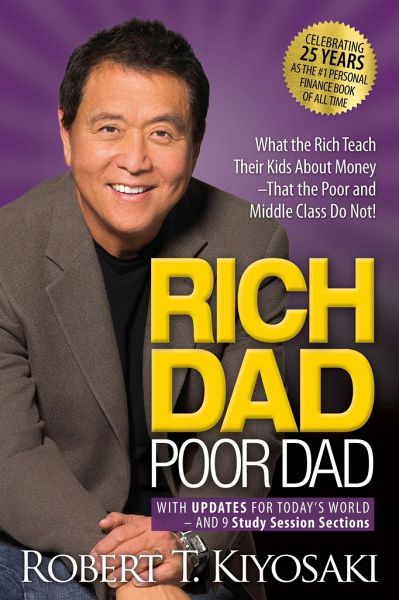
Rich Dad Poor Dad

Rich Dad Poor Dad

Personal Finance

Rich Dad Poor Dad

Rich Dad Poor Dad: What the Rich Teach Their Kids About Money That the Poor and Middle Class Do Not! is a 1997 book written by Robert T. Kiyosaki and Sharon Lechter

The Millionaire Next door

⭐ Overview / Summary

This book contrasts the financial teachings of Kiyosaki’s two father figures—his educated but broke “Poor Dad” and his entrepreneurial, wealthy “Rich Dad.” It focuses on building assets, escaping the rat race, and developing financial intelligence outside the traditional school system.

💡 Key Points

  • The rich focus on assets, the poor focus on income.

  • Schools teach academics, not financial literacy.

  • The rat race keeps people stuck in work → spend → debt cycles.

  • Financial independence comes from owning assets that generate cash flow.

🔍 Interesting Insight

The book breaks the myth that a high salary equals wealth. Wealth comes from what you keep and what you invest in, not what you earn.

📚 Lessons Learned

  • Buy assets, not liabilities.

  • Learn about money, investing, business, and tax advantages.

  • Build cash-flow systems.

🎯 Who Should Read It?

Beginners, young adults, entrepreneurs, and anyone wanting a mindset shift.

More Books

2000 plus word search emeraldbookclub.org
2000 Plus Word Search

Embark on an exhilarating journey through the captivating world of words with "2000 Plus Large Vocabulary Word Search For Adults

Big A alphabet word search for adults emeraldbookclub.org
Big A Alphabet Word Search

Embark on a fascinating journey through the alphabet with "Alphabet Adventure: 2000 Words Starting with 'A

Mastering finance Word search for adults emerald book club
Mastering Finance Word Search

Delve into the intricate world of finance with "Mastering Finance: The Ultimate Word Search Book for Financial Enthusiasts

Secrets of The Millionaire Mind

Secrets of The Millionaire Mind

Self Help

Secrets of the Millionaire Mind

Secrets of the Millionaire Mind: Mastering the Inner Game of Wealth.

#1 New York Times, Wall Street Journal, and USA Today Bestseller! Secrets of the Millionaire Mind reveals the missing link between wanting success and achieving it!

Secrets of the millionaire mind

⭐ Overview / Summary

Secrets of the Millionaire Mind explores the idea that wealth begins internally—with your mindset, beliefs, habits, and “money blueprint.” T. Harv Eker argues that every person has an internal financial thermostat shaped by childhood, environment, and subconscious beliefs.
This thermostat determines how much wealth we are comfortable attracting, keeping, or losing.
The book teaches how to reprogram your financial mindset to think and act like wealthy people, ultimately improving your financial results.


💡 Main Themes & Key Points

1. Your “money blueprint” shapes your financial destiny

Eker explains that subconscious beliefs about money—formed from childhood and family influences—determine your ability to create wealth.

2. Rich people think differently than poor and middle-class people

Wealthy individuals focus on opportunities, abundance, growth, and responsibility instead of fear, scarcity, or blame.

3. Thoughts → Feelings → Actions → Results

Eker emphasises that changing your thoughts is the first step to changing your financial life.

4. The Wealth Files: 17 ways rich people think

The book outlines key mental patterns of wealthy individuals, such as:

  • Rich people believe “I create my life.”

  • Rich people focus on opportunities.

  • Rich people manage money well.

  • Rich people learn and grow constantly.

5. Money is a tool for freedom, not stress

The author encourages readers to view money as something that amplifies your ability to help yourself and others.

6. Managing money wisely attracts more money

Using systems like budgeting, saving, investing, and giving helps build long-term wealth.


🔍 What I Found Most Interesting

The concept of the “money blueprint” is powerful. Many people sabotage their own financial success without realising it—simply because they grew up hearing statements like:

  • “Money is evil.”

  • “Rich people are greedy.”

  • “We can't afford that.”
    Eker explains how these childhood messages silently limit adults from achieving their financial goals.
    Reprogramming these beliefs can immediately shift your financial behaviour and results.


📚 Lessons Learned

  • Changing your mindset is the foundation of changing your financial life.

  • Wealthy people take responsibility—they don’t blame circumstances.

  • Money grows when it is managed well, even if you start with very little.

  • Self-doubt, scarcity thinking, and fear prevent people from taking opportunities.


🎯 Who Should Read This Book?

Anyone who feels stuck financially, struggles with money management, or wants to improve their relationship with money.
Great for entrepreneurs, young adults, and anyone interested in financial psychology, mindset work, or personal development.


⭐ Rating:

⭐⭐⭐⭐⭐ (5/5)

More Books

2000 plus word search emeraldbookclub.org
2000 Plus Word Search

Embark on an exhilarating journey through the captivating world of words with "2000 Plus Large Vocabulary Word Search For Adults

Big A alphabet word search for adults emeraldbookclub.org
Big A Alphabet Word Search

Embark on a fascinating journey through the alphabet with "Alphabet Adventure: 2000 Words Starting with 'A

Mastering finance Word search for adults emerald book club
Mastering Finance Word Search

Delve into the intricate world of finance with "Mastering Finance: The Ultimate Word Search Book for Financial Enthusiasts

The Millionaire Next Door

The Millionaire Next Door

wealth

The Millionaire Next Door

The Millionaire Next Door: The Surprising Secrets of America's Wealthy is a 1996 book by Thomas J. Stanley and William D. Danko. The book is a compilation of research done by the two authors in the profiles of American millionaires. 

The Millionaire Next door

⭐ Overview / Summary

The Millionaire Next Door is a research-based book that uncovers the habits, behaviours, and lifestyles of self-made millionaires in America. Instead of flashy spending and luxury lifestyles, most wealthy individuals live quietly, budget carefully, and build wealth over decades. The authors use surveys, case studies, and data to challenge stereotypes about what wealthy people really look like.


💡 Main Themes & Key Points

1. Most millionaires live well below their means

They avoid unnecessary spending, drive modest cars, and prioritize savings over status.

2. Wealth is built through discipline, not high income

Many millionaires don’t earn exceptionally high salaries—they simply save and invest consistently.

3. Time, energy, and money go into wealth-building

They plan, budget, track expenses, and make conscious financial decisions.

4. Financial independence matters more than displaying wealth

Millionaires avoid lifestyle inflation and status symbols.

5. The importance of investing wisely

They put money into appreciating assets, not liabilities.

6. Avoiding debt is a core behaviour

They carefully manage or avoid loans that don’t build wealth.


🔍 What I Found Most Interesting

The biggest surprise is that most millionaires are not the people you expect—no flashy brands, fancy cars, or luxury homes. True millionaires are often teachers, small-business owners, or professionals who quietly save and invest for decades.
The book teaches that wealth is what you don’t see, not what you spend.


📚 Lessons Learned

  • Wealth comes from habits, not luck or high salaries.

  • Living below your means is one of the strongest wealth-building strategies.

  • Financial discipline, budgeting, and consistent investing matter more than income.

  • Avoiding lifestyle inflation helps you grow wealth steadily.


🎯 Who Should Read This Book?

Anyone who wants to improve their financial habits, build long-term wealth, avoid debt, or break free from the pressure to “look rich.” This book is especially great for young professionals, entrepreneurs, and anyone feeling left behind financially.


⭐ Rating:

⭐⭐⭐⭐⭐ (5/5)

More Books

2000 plus word search emeraldbookclub.org
2000 Plus Word Search

Embark on an exhilarating journey through the captivating world of words with "2000 Plus Large Vocabulary Word Search For Adults

Big A alphabet word search for adults emeraldbookclub.org
Big A Alphabet Word Search

Embark on a fascinating journey through the alphabet with "Alphabet Adventure: 2000 Words Starting with 'A

Mastering finance Word search for adults emerald book club
Mastering Finance Word Search

Delve into the intricate world of finance with "Mastering Finance: The Ultimate Word Search Book for Financial Enthusiasts

On December 21 by Amos Russel Wells

On December 21 by Amos Russel Wells

December 21 by Amos Russell Wells

Now let the weather do its worst,
With frost and sleet and blowing,
Rage like a beldam wild and curst,
And have its fill of snowing.
Now let the ice in savage vise
Grip meadow, brook, and branches,
Down from the north pour winter forth
In roaring avalanches.

I turn my collar to the blast
And greet the storm with laughter:
Your day, old Winter! use it fast,
For Spring is coming after.
The world may wear a frigid air,
But ah! its heart is burning;
Soon, soon will May dance down this way:
The year is at the turning.

There's not a sabre-charge of cold
But brings the blossoms nearer;
By every frost-flower we shall hold
The violets the dearer.
So rage and blow the drifting snow
And have your fill of sorrow:
The turning years bring smiles for tears;
We'll greet the spring to-morrow!

December By Drew Osmond

December By Drew Osmond

December by Drew Osmond

Never Have I felt a December
So cold, so lonely.
The walk along the lake,
That changed a fate
The stumble in the snow,
I didn’t let go.

The daring walk,
Onto thin ice
Are you watching?
My attempts to see a rise in you.
So delicate was that goodbye
Darkness, up the long road
Upon the destination, no one knew

I ran home,
To see you waiting there.
You waited for me,
For hours I guessed.
This time a true
Goodbye

We made a plan,
So sketchy at first.
Maybe Just nervous?
Never knowing, what could unfold
We changed our plans.
Much more bold.

I rambled on,
For hours it seemed.
Until we arrived,
To a bran new scene

Both so nervous,
But we knew what we wanted.
I motioned you closer,
No cold shoulder.
Comfortably sat,
Until the movie was over

We met some friends, later that night
Continued to smile,
Be polite.
Just dreaming of holding you tight
I think I might…

A gentle kiss upon your lips
I did not miss.

Out in the cold, yet,
All I felt was warmth
The warmness of you and I,
Another night
Goodbye

Sit next to me in the morning,
The bell is ringing…
I’m ignoring
So captivated by your smile.
Again I depart.
Goodbye.

The night before Christmas eve,
We stayed awake for hours
Until our wish
Had finally come true

Its been a year
Since that December
And yet I miss you,
Just as much as I remember

That December so warm,
Now it plagues me with cold
No longer we are.
Growing old
Goodbye

December,
December!
How I hate you now
Drown my mind
In your white lies.

No longer,
Can I see your eyes
I have grown old of these,
goodbyes…

December
The month that will,
Confuse me forever
Lost in the blizzard
Of my mind
We always say that, “truth is hard to find”
Goodbye

DECEMBER
goodbye…

Bittersweet December by Christina

Bittersweet December by Christina

Bittersweet December by
Christina O 

So tired of all the memories 
It brings me back to you
And I can't help but wonder
How I'll go on another year 
Fighting all these demons 
That remind me you're not here 

It's a bittersweet December 
And it haunts me all the time
I can't change what happened
But I can make it all brand new 

I go back to that day 
And picture the last time 
It breaks me down
And I fall to my knees
Asking why?
Why? 

It's a bittersweet December 
And it haunts me all the time
I can't change what happened
But I can make it all brand new 

One year passes, now almost two
And I'm scared to face it
But somehow you know 
And the day though dark 
Was suddenly turned brighter

A beautiful little face
Born on this day 

It's a bittersweet December 
And it haunts me all the time
I can't change what happened
But I can make it all brand new 

It's a bittersweet December 
And though it haunts me all the time
I can finally breath again
With the miracle you've blessed

In this bittersweet December

December by Joseph Herron

December by Joseph Herron

December by Joseph Herron

Child of the grand old winter,
December floateth by;
And the ground without is bare and white
As the moon in the cloudless sky.

The wind blows cold and dreary,
Across the whitened plain;
And we see the oaks with their branches bare,
Through the frost on the window pane.

But within where the yule-log's burning,
Each heart is happy and gay;
For the loving Prince of earth and Heaven,
Was born on Christmas day.

Then hail! grand old December,
We welcome you once more!
For the memory sweet of a night you bring,
That came in the days of yore.

Pin It on Pinterest