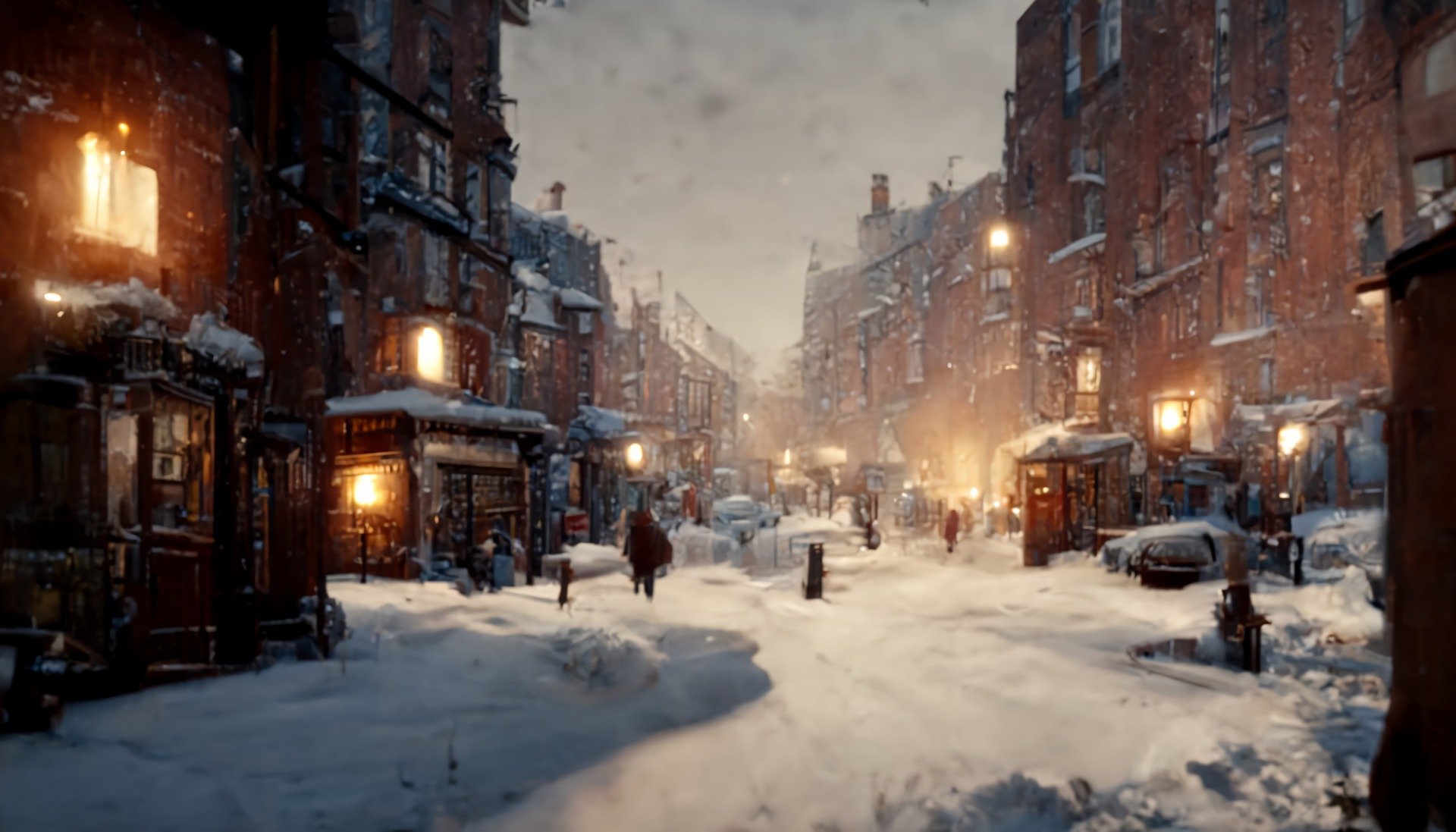
You have again made your way in, Cold and beautiful. You are December, And I love you. Despite the seasonal celebration, I know you to be more. You are calm, You allow me to slow, To envelope the tranquility I crave. Your winds, December, though cold, Allow me to feel the life in my cheeks, And if I’m lucky, It too will bring the sweetness Of some distant firewood. I welcome your snow, December. So that I may sit wrapped in wool, By candlelight, The dog having nestled in as well, Watching the frozen rain accumulate On the branches of the birch and oak. Though I live in the city, I dream of loving you December, Even more – if I were in nature. Then I would feel closer to you, As a lover may feel, Or perhaps a mother to a child. I would know, I think, how to More fully know why I am in love With you. And being with you, December, Brings me to life.
It is November And all the leaves face my way Overlapping tussocks of grass Like long forgotten hills Dwelling in the overhang of fall
It is November Orange ribbons hand in tatters Patched up yellow cloaks are draped And whisking in the wind Then drifting to the earth And becoming winters pillow
It is November And there stands a lonely tower Base adorned with red bushes Flags no longer flying Crouched and crippled by the frost
It is November My feet bear down on acorns A thousand fold All left and forgotten Even to the squirrels Just a layer ‘neath my feet
It is November The solitary pines stand solid Near the ivy covered wall Their boughs raise and hail the heavens And their needles fall As the autumn wind dances a mournful dance
It is November Bare branches rake the cloudy skies And scratch out their heartfelt pleas Against cold glass windows Seeking what they have lost and will not find
It is November An old gate stands ajar Beckoning to no one Standing solidly open Despite the cruel fall wind
It is November Trees make colored circles A fading gold on fading green A fireworks display Now falling to the ground
It is November Cold air fills my body Cruel wind tosses my hair I seek a shelter from autumn My door is open Now I am home
Join us every Monday night at 8 PM GMT for Poetic Flows, a soothing and inspiring podcast by Emerald Book Club, where words come alive through the beauty of poetry. Hosted in a serene, reflective atmosphere, Poetic Flows showcases captivating spoken-word performances, poetic readings, and thought-provoking discussions about the art of poetry.
Each episode brings together poets, authors, and poetry lovers to share their craft, emotions, and insights. Whether you’re a seasoned poet or simply enjoy listening to the magic of words, this is the perfect space to explore the richness of language and connect with like-minded individuals.
Poetry is a form of literary art that uses aesthetic and often rhythmic qualities of language to evoke meanings in addition to, or in place of, literal or surface-level meanings. Any particular instance of poetry is called a poem and is written by a poet. Wikipedia
Tune in for:
Powerful spoken-word performances
Insightful discussions on classic and contemporary poetry
Special guest appearances from poets and literary enthusiasts
A deep dive into the meaning and inspiration behind featured works
Unwind, listen, and let the rhythm of words flow through you. Poetic Flows is your Monday night escape into the world of poetry.
📅 Every Monday at 8 PM GMT 📍 Hosted by Emerald Book Club
One heavy day I ran away from the grim face of society and the dizzying clamor of the city and directed my weary step to the spacious alley. I pursued the beckoning course of the rivulet and the musical sounds of the birds until I reached a lonely spot where the flowing branches of the trees prevented the sun from the touching the earth.
I stood there, and it was entertaining to my soul - my thirsty soul who had seen naught but the mirage of life instead of its sweetness.
I was engrossed deeply in thought and my spirits were sailing the firmament when a hour, wearing a sprig of grapevine that covered part of her naked body, and a wreath of poppies about her golden hair, suddenly appeared to me. As she she realized my astonishment, she greeted me saying, 'Fear me not; I am the Nymph of the Jungle.'
'How can beauty like yours be committed to live in this place? Please tell me who your are, and whence you come? ' I asked. She sat gracefully on the green grass and responded, 'I am the symbol of nature! I am the ever virgin your forefathers worshipped, and to my honor they erected shrines and temples at Baalbek and Jbeil.' And I dared say, 'But those temples and shrines were laid waste and the bones of my adoring ancestors became a part of the earth; nothing was left to commemorate their goddess save a pitiful few and the forgotten pages in the book of history.'
She replied, 'Some goddesses live in the lives of their worshippers and die in their deaths, while some live an eternal and infinite life. My life is sustained by the world of beauty which you will see where ever you rest your eyes, and this beauty is nature itself; it is the beginning of the shepherds joy among the hills, and a villagers happiness in the fields, and the pleasure of the awe filled tribes between the mountains and the plains. This Beauty promotes the wise into the throne the truth.'
Then I said, 'Beauty is a terrible power! ' And she retorted, 'Human beings fear all things, even yourselves. You fear heaven, the source of spiritual peace; you fear nature, the haven of rest and tranquility; you fear the God of goodness and accuse him of anger, while he is full of love and mercy.'
After a deep silence, mingled with sweet dreams, I asked, 'Speak to me of that beauty which the people interpret and define, each one according to his own conception; I have seen her honored and worshipped in different ways and manners.'
She answered, 'Beauty is that which attracts your soul, and that which loves to give and not to receive. When you meet Beauty, you feel that the hands deep within your inner self are stretched forth to bring her into the domain of your heart. It is the magnificence combined of sorrow and joy; it is the Unseen which you see, and the Vague which you understand, and the Mute which you hear - it is the Holy of Holies that begins in yourself and ends vastly beyond your earthly imagination.'
Then the Nymph of the Jungle approached me and laid her scented hands upon my eyes. And as she withdrew, I found me alone in the valley. When I returned to the city, whose turbulence no longer vexed me, I repeated her words:
'Beauty is that which attracts your soul, and that which loves to give and not to receive.'