by Admin | Jan 1, 2025 | Life Poems, Nature Poems, Poems, Poetic Flows Podcast, Poetry, Winter Poems
Year's End by Richard Wilbur
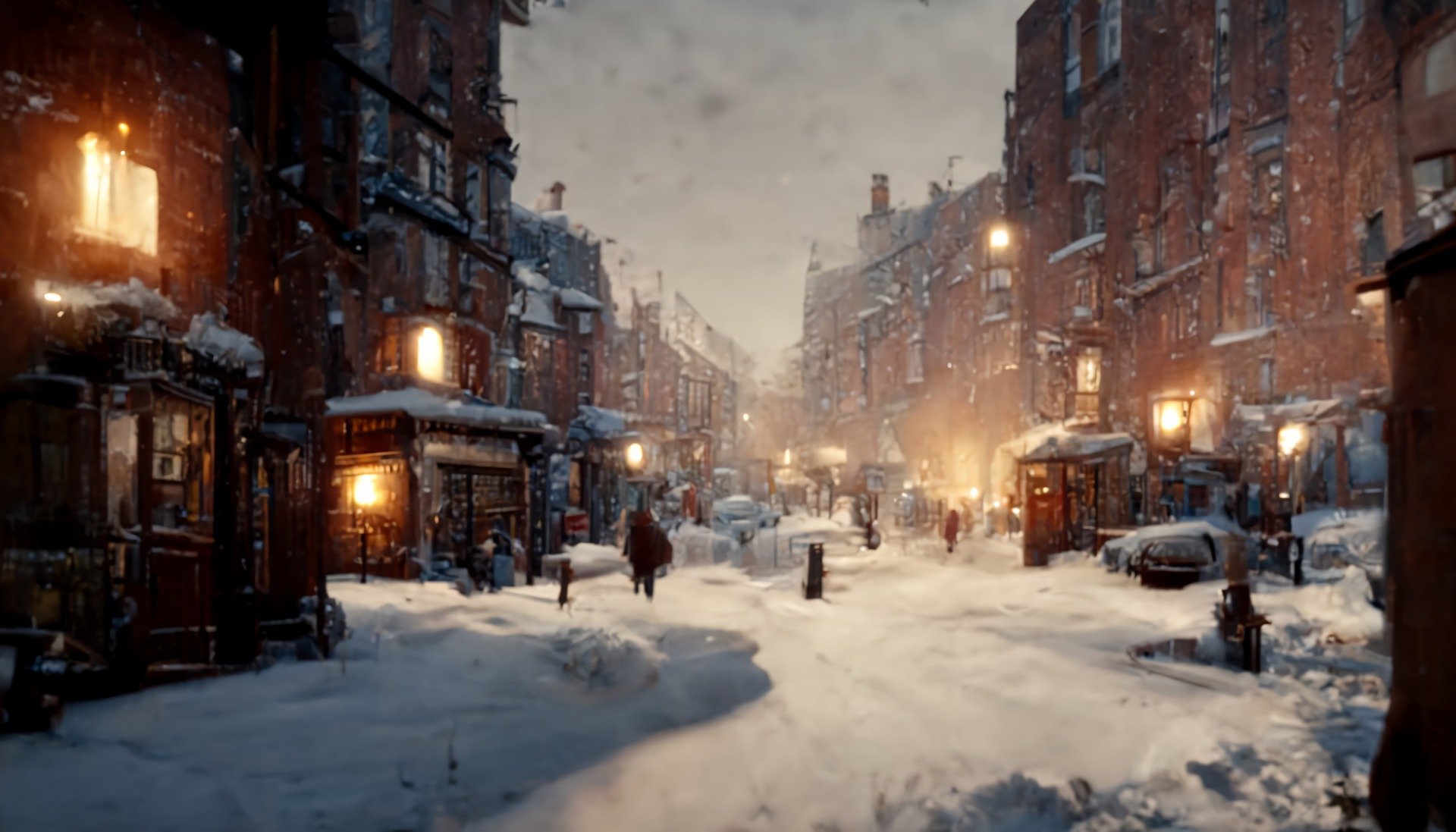
Now winter downs the dying of the year,
And night is all a settlement of snow;
From the soft street the rooms of houses show
A gathered light, a shapen atmosphere,
Like frozen-over lakes whose ice is thin
And still allows some stirring down within.
I’ve known the wind by water banks to shake
The late leaves down, which frozen where they fell
And held in ice as dancers in a spell
Fluttered all winter long into a lake;
Graved on the dark in gestures of descent,
They seemed their own most perfect monument.
There was perfection in the death of ferns
Which laid their fragile cheeks against the stone
A million years. Great mammoths overthrown
Composedly have made their long sojourns,
Like palaces of patience, in the gray
And changeless lands of ice. And at Pompeii
The little dog lay curled and did not rise
But slept the deeper as the ashes rose
And found the people incomplete, and froze
The random hands, the loose unready eyes
Of men expecting yet another sun
To do the shapely thing they had not done.
These sudden ends of time must give us pause.
We fray into the future, rarely wrought
Save in the tapestries of afterthought.
More time, more time. Barrages of applause
Come muffled from a buried radio.
The New-year bells are wrangling with the snow.
Copyright Credit: Richard Wilbur, “Year’s End” from Collected Poems 1943-2004
by Admin | Dec 3, 2024 | December Poems, Life Poems, Nature Poems, Poems, Poetic Flows Podcast, Poetry, Winter Poems
December by Thomas Parsons
You have again made your way in,
Cold and beautiful.
You are December,
And I love you.
Despite the seasonal celebration,
I know you to be more.
You are calm,
You allow me to slow,
To envelope the tranquility I crave.
Your winds, December, though cold,
Allow me to feel the life in my cheeks,
And if I’m lucky,
It too will bring the sweetness
Of some distant firewood.
I welcome your snow, December.
So that I may sit wrapped in wool,
By candlelight,
The dog having nestled in as well,
Watching the frozen rain accumulate
On the branches of the birch and oak.
Though I live in the city,
I dream of loving you December,
Even more – if I were in nature.
Then I would feel closer to you,
As a lover may feel,
Or perhaps a mother to a child.
I would know, I think, how to
More fully know why I am in love
With you.
And being with you, December,
Brings me to life.
Written by Thomas Parsons
by Admin | Nov 19, 2024 | Autumn Poems, Life Poems, Nature Poems, November Poems, Poems, Poetry
It Is November
It is November
And all the leaves face my way
Overlapping tussocks of grass
Like long forgotten hills
Dwelling in the overhang of fall
It is November
Orange ribbons hand in tatters
Patched up yellow cloaks are draped
And whisking in the wind
Then drifting to the earth
And becoming winters pillow
It is November
And there stands a lonely tower
Base adorned with red bushes
Flags no longer flying
Crouched and crippled by the frost
It is November
My feet bear down on acorns
A thousand fold
All left and forgotten
Even to the squirrels
Just a layer ‘neath my feet
It is November
The solitary pines stand solid
Near the ivy covered wall
Their boughs raise and hail the heavens
And their needles fall
As the autumn wind dances a mournful dance
It is November
Bare branches rake the cloudy skies
And scratch out their heartfelt pleas
Against cold glass windows
Seeking what they have lost and will not find
It is November
An old gate stands ajar
Beckoning to no one
Standing solidly open
Despite the cruel fall wind
It is November
Trees make colored circles
A fading gold on fading green
A fireworks display
Now falling to the ground
It is November
Cold air fills my body
Cruel wind tosses my hair
I seek a shelter from autumn
My door is open
Now I am home
Elizabeth Shield
by Admin | Oct 14, 2024 | Death Poems, Life Poems, Poems, Poetic Flows Podcast, Poetry, Sad Poems
A Psalm of Life By Henry Wadsworth Longfellow
Tell me not, in mournful numbers,
Life is but an empty dream!
For the soul is dead that slumbers,
And things are not what they seem.
Life is real! Life is earnest!
And the grave is not its goal;
Dust thou art, to dust returnest,
Was not spoken of the soul.
Not enjoyment, and not sorrow,
Is our destined end or way;
But to act, that each to-morrow
Find us farther than to-day.
Art is long, and Time is fleeting,
And our hearts, though stout and brave,
Still, like muffled drums, are beating
Funeral marches to the grave.
In the world’s broad field of battle,
In the bivouac of Life,
Be not like dumb, driven cattle!
Be a hero in the strife!
Trust no Future, howe’er pleasant!
Let the dead Past bury its dead!
Act,— act in the living Present!
Heart within, and God o’erhead!
Lives of great men all remind us
We can make our lives sublime,
And, departing, leave behind us
Footprints on the sands of time;
Footprints, that perhaps another,
Sailing o’er life’s solemn main,
A forlorn and shipwrecked brother,
Seeing, shall take heart again.
Let us, then, be up and doing,
With a heart for any fate;
Still achieving, still pursuing,
Learn to labor and to wait.
by Admin | Sep 30, 2024 | Life Poems, Poems, Poetry, Sad Poems
The Road Not Taken By Robert Frost
Two roads diverged in a yellow wood,
And sorry I could not travel both
And be one traveler, long I stood
And looked down one as far as I could
To where it bent in the undergrowth;
Then took the other, as just as fair,
And having perhaps the better claim,
Because it was grassy and wanted wear;
Though as for that the passing there
Had worn them really about the same,
And both that morning equally lay
In leaves no step had trodden black.
Oh, I kept the first for another day!
Yet knowing how way leads on to way,
I doubted if I should ever come back.
I shall be telling this with a sigh
Somewhere ages and ages hence:
Two roads diverged in a wood, and I—
I took the one less traveled by,
And that has made all the difference.
by Admin | Jun 26, 2024 | Life Poems, Nature Poems, Poems, Poetry
Dark Ages by John Reade
The years through which aught that hath life, O Sun,
Hath watched or felt thy rising, what are they
To those vast æons when, from night to day,
From dawn to dark, thy circuit thou didst run,
With none to greet thee or regret thee; none
To bless thy glowing harbinger of cloud,
Rose-tinted; none to sigh when, like a shroud,
The banner of Night proclaimed her victory won?
Yet, through that reign of seeming death, so long
To our imperfect ken, the marvellous force
Which means to ends adjusts in Nature's plan
Was bringing to the birth that eye of man,
Which now, O Sun, surveys thy farthest course—
A speck amid the countless starry throng.
The poem reflects on the vast expanse of time through which the sun has existed and its role in the universe. Here's a critical summary and analysis:
Summary:
The poem contemplates the immense epochs during which the sun has risen and set, stretching back to periods far beyond human existence. The speaker contrasts these vast aeons with the relatively brief span during which life on Earth, especially human life, has observed and felt the sun’s presence. The poem highlights the sun’s unacknowledged journeys through the cosmos before any beings existed to appreciate its light and warmth. Despite the long era of seeming emptiness, the natural processes were at work, leading to the emergence of humans who now have the capacity to observe and reflect upon the sun’s path.
Analysis:
Themes:
- Time and Eternity:
- The poem delves into the concept of time, contrasting the brief span of human history with the incomprehensible length of cosmic time.
- The "vast aeons" represent an almost eternal past when the sun existed without any observers.
- Existence and Observation:
- There’s a significant focus on the existence of the sun before life, emphasizing the idea that the sun’s value and significance are not diminished by the lack of observers.
- The emergence of human beings, who can now appreciate and contemplate the sun, is portrayed as a crucial development.
- Nature’s Plan and Evolution:
- The poem suggests that nature has a plan, where everything from the sun’s existence to the development of human beings is part of a grand design.
- The "marvellous force which means to ends adjusts in Nature's plan" implies an inherent order and purpose in the natural world.
Structure and Form:
- The poem is structured as a single, reflective stanza with a rhyme scheme that ties the lines together.
- The use of enjambment helps to maintain the flow of thoughts and emphasizes the continuity of time and the seamless transition from one era to another.
Imagery and Symbolism:
- The Sun: Symbolizes constancy and the passage of time. It also represents the source of life and enlightenment.
- Night and Day: These opposing forces symbolize the cycle of existence, with the sun’s daily journey marking the rhythm of time.
- The Birth of Human Sight: The "eye of man" symbolizes human consciousness and the ability to appreciate and reflect on the universe.
Tone and Mood:
- The tone is contemplative and somewhat awe-inspiring, inviting the reader to ponder the vastness of time and the smallness of human existence in comparison.
- The mood evokes a sense of wonder and humility, acknowledging both the insignificance and the significance of human life in the grand scheme of things.
Conclusion:
The poem elegantly explores the themes of time, existence, and the evolution of life, using the sun as a central metaphor. It reflects on the grandeur of the cosmos and the unique position of humans as conscious observers within it. The interplay between the eternal presence of the sun and the relatively fleeting existence of humanity provides a profound commentary on our place in the universe.