Crusoe in England

Crusoe in England

Crusoe in England
A new volcano has erupted,
the papers say, and last week I was reading   
where some ship saw an island being born:   
at first a breath of steam, ten miles away;   
and then a black fleck—basalt, probably—
rose in the mate’s binoculars
and caught on the horizon like a fly.
They named it. But my poor old island’s still   
un-rediscovered, un-renamable.
None of the books has ever got it right.
Well, I had fifty-two
miserable, small volcanoes I could climb   
with a few slithery strides—
volcanoes dead as ash heaps.
I used to sit on the edge of the highest one   
and count the others standing up,
naked and leaden, with their heads blown off.   
I’d think that if they were the size   
I thought volcanoes should be, then I had   
become a giant;
and if I had become a giant,
I couldn’t bear to think what size   
the goats and turtles were,
or the gulls, or the overlapping rollers   
—a glittering hexagon of rollers   
closing and closing in, but never quite,   
glittering and glittering, though the sky   
was mostly overcast.
My island seemed to be
a sort of cloud-dump. All the hemisphere’s   
left-over clouds arrived and hung
above the craters—their parched throats   
were hot to touch.
Was that why it rained so much?
And why sometimes the whole place hissed?   
The turtles lumbered by, high-domed,   
hissing like teakettles.
(And I’d have given years, or taken a few,   
for any sort of kettle, of course.)
The folds of lava, running out to sea,
would hiss. I’d turn. And then they’d prove   
to be more turtles.
The beaches were all lava, variegated,   
black, red, and white, and gray;
the marbled colors made a fine display.   
And I had waterspouts. Oh,
half a dozen at a time, far out,
they’d come and go, advancing and retreating,   
their heads in cloud, their feet in moving patches   
of scuffed-up white.
Glass chimneys, flexible, attenuated,   
sacerdotal beings of glass … I watched   
the water spiral up in them like smoke.   
Beautiful, yes, but not much company.
I often gave way to self-pity.
“Do I deserve this? I suppose I must.
I wouldn’t be here otherwise. Was there   
a moment when I actually chose this?
I don’t remember, but there could have been.”   
What’s wrong about self-pity, anyway?
With my legs dangling down familiarly   
over a crater’s edge, I told myself
“Pity should begin at home.” So the more   
pity I felt, the more I felt at home.
The sun set in the sea; the same odd sun   
rose from the sea,
and there was one of it and one of me.   
The island had one kind of everything:   
one tree snail, a bright violet-blue
with a thin shell, crept over everything,   
over the one variety of tree,
a sooty, scrub affair.
Snail shells lay under these in drifts   
and, at a distance,
you’d swear that they were beds of irises.   
There was one kind of berry, a dark red.   
I tried it, one by one, and hours apart.   
Sub-acid, and not bad, no ill effects;   
and so I made home-brew. I’d drink   
the awful, fizzy, stinging stuff
that went straight to my head
and play my home-made flute
(I think it had the weirdest scale on earth)   
and, dizzy, whoop and dance among the goats.   
Home-made, home-made! But aren’t we all?   
I felt a deep affection for
the smallest of my island industries.   
No, not exactly, since the smallest was   
a miserable philosophy.
Because I didn’t know enough.
Why didn’t I know enough of something?   
Greek drama or astronomy? The books   
I’d read were full of blanks;
the poems—well, I tried
reciting to my iris-beds,
“They flash upon that inward eye,
which is the bliss …” The bliss of what?   
One of the first things that I did
when I got back was look it up.
The island smelled of goat and guano.   
The goats were white, so were the gulls,   
and both too tame, or else they thought   
I was a goat, too, or a gull.
Baa, baa, baa and shriek, shriek, shriek,
baa … shriek … baa  I still can’t shake   
them from my ears; they’re hurting now.
The questioning shrieks, the equivocal replies   
over a ground of hissing rain
and hissing, ambulating turtles
got on my nerves.
When all the gulls flew up at once, they sounded
like a big tree in a strong wind, its leaves.   
I’d shut my eyes and think about a tree,   
an oak, say, with real shade, somewhere.   
I’d heard of cattle getting island-sick.   
I thought the goats were.
One billy-goat would stand on the volcano
I’d christened Mont d’Espoir or Mount Despair
(I’d time enough to play with names),   
and bleat and bleat, and sniff the air.   
I’d grab his beard and look at him.   
His pupils, horizontal, narrowed up
and expressed nothing, or a little malice.   
I got so tired of the very colors!   
One day I dyed a baby goat bright red   
with my red berries, just to see   
something a little different.
And then his mother wouldn’t recognize him.
Dreams were the worst. Of course I dreamed of food
and love, but they were pleasant rather
than otherwise. But then I’d dream of things   
like slitting a baby’s throat, mistaking it   
for a baby goat. I’d have
nightmares of other islands
stretching away from mine, infinities   
of islands, islands spawning islands,   
like frogs’ eggs turning into polliwogs   
of islands, knowing that I had to live   
on each and every one, eventually,   
for ages, registering their flora,   
their fauna, their geography.
Just when I thought I couldn’t stand it   
another minute longer, Friday came.   
(Accounts of that have everything all wrong.)   
Friday was nice.
Friday was nice, and we were friends.   
If only he had been a woman!
I wanted to propagate my kind,   
and so did he, I think, poor boy.
He’d pet the baby goats sometimes,
and race with them, or carry one around.   
—Pretty to watch; he had a pretty body.
And then one day they came and took us off.
Now I live here, another island,
that doesn’t seem like one, but who decides?
My blood was full of them; my brain   
bred islands. But that archipelago
has petered out. I’m old.
I’m bored, too, drinking my real tea,   
surrounded by uninteresting lumber.
The knife there on the shelf—
it reeked of meaning, like a crucifix.
It lived. How many years did I   
beg it, implore it, not to break?
I knew each nick and scratch by heart,
the bluish blade, the broken tip,
the lines of wood-grain on the handle …
Now it won’t look at me at all.   
The living soul has dribbled away.   
My eyes rest on it and pass on.
The local museum’s asked me to
leave everything to them:
the flute, the knife, the shrivelled shoes,
my shedding goatskin trousers
(moths have got in the fur),
the parasol that took me such a time   
remembering the way the ribs should go.
It still will work but, folded up,
looks like a plucked and skinny fowl.
How can anyone want such things?
—And Friday, my dear Friday, died of measles
seventeen years ago come March.
Thank God it’s Friday

Thank God it’s Friday

Monday, such a blah day, we’re all in a mood.
Tuesday, things are better, but really, not that good.
Wednesday, so called hump day, we are getting there.
Thursday, “little Friday”, there’s a party in the air!

Thank God it’s Friday! What took so long?
Time to get crazy! A little wine and song.
It’s time to party! The weekend is here.
Fire up the charcoal, ice down the beer!
Dancing until the dawn’s early light.
Thank God it’s Friday! Bring on the night!

Saturday, sleeping in, doing all the chores.
Mow the lawn, rake the leaves, head out to the stores.
Sunday’s here, time to rest. It never seems to last.
Weekend’s gone, where did it go? Time goes so fast!

Thank God it’s Friday! What took so long?
Time to get crazy! A little wine and song.
It’s time to party! The weekend is here.
Fire up the charcoal, ice down the beer!
Dancing until the dawn’s early light.
Thank God it’s Friday! Bring on the night!

Day by day we go through life, never to pretend.
We are living everyday to get to the weekend!

Thank God it’s Friday! What took so long?
Time to get crazy! A little wine and song.
It’s time to party! The weekend is here.
Fire up the charcoal, ice down the beer!
Dancing until the dawn’s early light.
Thank God it’s Friday! Bring on the night!

Alone by Maya Angelou

Lying, thinking
Last night
How to find my soul a home
Where water is not thirsty
And bread loaf is not stone
I came up with one thing
And I don’t believe I’m wrong
That nobody,
But nobody
Can make it out here alone.

Alone, all alone
Nobody, but nobody
Can make it out here alone.

There are some millionaires
With money they can’t use
Their wives run round like banshees
Their children sing the blues
They’ve got expensive doctors
To cure their hearts of stone.
But nobody
No, nobody
Can make it out here alone.

Alone, all alone
Nobody, but nobody
Can make it out here alone.

Now if you listen closely
I’ll tell you what I know
Storm clouds are gathering
The wind is gonna blow
The race of man is suffering
And I can hear the moan,
’Cause nobody,
But nobody
Can make it out here alone.

Alone, all alone
Nobody, but nobody
Can make it out here alone.

About Maya Angelou

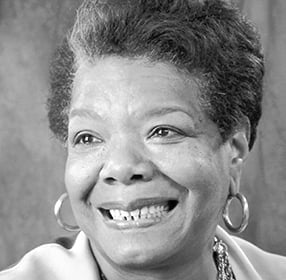
Maya Angelou was born Marguerite Johnson in St. Louis, Missouri, on April 4, 1928. She grew up in St. Louis and Stamps, Arkansas. She was an author, poet, historian, songwriter, playwright, dancer, stage and screen producer, director, performer, singer, and civil rights activist.

poetic flows podcast emeraldbookclub.org

Poetic Flows Podcast

Poetic Flows Podcast is a haven for poetry lovers and creative souls. Our mission is to weave together the beauty of poetry with the depth of human emotion, offering a unique auditory experience that inspires and uplifts. Join us every Monday night at 8pm GMT for live sessions that promise to stir your imagination and touch your heart.

A November Night by Sara Teasdale

A November Night

There!  See the line of lights,
A chain of stars down either side the street —
Why can’t you lift the chain and give it to me,
A necklace for my throat?  I’d twist it round
And you could play with it.  You smile at me
As though I were a little dreamy child
Behind whose eyes the fairies live. . . .  And see,
The people on the street look up at us
All envious.  We are a king and queen,
Our royal carriage is a motor bus,
We watch our subjects with a haughty joy. . . .
How still you are!  Have you been hard at work
And are you tired to-night?  It is so long
Since I have seen you — four whole days, I think.
My heart is crowded full of foolish thoughts
Like early flowers in an April meadow,
And I must give them to you, all of them,
Before they fade.  The people I have met,
The play I saw, the trivial, shifting things
That loom too big or shrink too little, shadows
That hurry, gesturing along a wall,
Haunting or gay — and yet they all grow real
And take their proper size here in my heart
When you have seen them. . . .  There’s the Plaza now,
A lake of light!  To-night it almost seems
That all the lights are gathered in your eyes,
Drawn somehow toward you.  See the open park
Lying below us with a million lamps
Scattered in wise disorder like the stars.
We look down on them as God must look down
On constellations floating under Him
Tangled in clouds. . . .  Come, then, and let us walk
Since we have reached the park.  It is our garden,
All black and blossomless this winter night,
But we bring April with us, you and I;
We set the whole world on the trail of spring.
I think that every path we ever took
Has marked our footprints in mysterious fire,
Delicate gold that only fairies see.
When they wake up at dawn in hollow tree-trunks
And come out on the drowsy park, they look
Along the empty paths and say, “Oh, here
They went, and here, and here, and here!  Come, see,
Here is their bench, take hands and let us dance
About it in a windy ring and make
A circle round it only they can cross
When they come back again!” . . .  Look at the lake —
Do you remember how we watched the swans
That night in late October while they slept?
Swans must have stately dreams, I think.  But now
The lake bears only thin reflected lights
That shake a little.  How I long to take
One from the cold black water — new-made gold
To give you in your hand!  And see, and see,
There is a star, deep in the lake, a star!
Oh, dimmer than a pearl — if you stoop down
Your hand could almost reach it up to me. . . .

There was a new frail yellow moon to-night —
I wish you could have had it for a cup
With stars like dew to fill it to the brim. . . .

How cold it is!  Even the lights are cold;
They have put shawls of fog around them, see!
What if the air should grow so dimly white
That we would lose our way along the paths
Made new by walls of moving mist receding
The more we follow. . . .  What a silver night!
That was our bench the time you said to me
The long new poem — but how different now,
How eerie with the curtain of the fog
Making it strange to all the friendly trees!
There is no wind, and yet great curving scrolls
Carve themselves, ever changing, in the mist.
Walk on a little, let me stand here watching
To see you, too, grown strange to me and far. . . .
I used to wonder how the park would be
If one night we could have it all alone —
No lovers with close arm-encircled waists
To whisper and break in upon our dreams.
And now we have it!  Every wish comes true!
We are alone now in a fleecy world;
Even the stars have gone.  We two alone!

November By Emily Dickinson

Besides the autumn poets sing,
A few prosaic days
A little this side of the snow
And that side of the haze.


A few incisive mornings,
A few ascetic eyes, —
Gone Mr. Bryant’s golden-rod,
And Mr. Thomson’s sheaves.


Still is the bustle in the brook,
Sealed are the spicy valves;
Mesmeric fingers softly touch
The eyes of many elves.


Perhaps a squirrel may remain,
My sentiments to share.
Grant me, O Lord, a sunny mind,
Thy windy will to bear!

I am Thankful for by Nancy J Carmody

I Am Thankful For

by Nancy J Carmody

I am thankful for

…..the mess to clean up after a party
because it means I have been surrounded by friends.

​…..the taxes that I pay
because it means that I’m employed.

…..the clothes that fit a little too snug
because it means I have enough to eat.

​…..my shadow who watches me work
because it means I am out in the sunshine.

​…..the spot I find at the far end of the parking lot
because it means I am capable of walking.

​…..all the complaining I hear about our Government
because it means we have freedom of speech.

​…..that lady behind me in church who sings offkey
​because it means that I can hear.

​…..lawn that needs mowing, windows that need cleaning, and gutters that need fixing
because it means I have a home.

…..my huge heating bill
because it means that I am warm.

​…..weariness and aching muscles at the end of the day
because it means that I have been productive.

…..the alarm that goes off in the early morning hours
because it means that I am alive.

I am Thankful for by Nancy J Carmody

I Am Thankful For by Nancy J Carmody I am thankful for …..the mess to clean up after a partybecause it means I have been surrounded by friends. ​…..the taxes that I paybecause it means that I’m employed. …..the clothes that fit a little too snugbecause it means I have...

Gratitude by Edgar Albert Guest

Gratitude by Edgar Albert Guest Be grateful for the kindly friends that walk along your way,Be grateful for the skies of blue that smile from day to day,Be grateful for the health you own, the work you find to do,For round about you there are men less fortunate than...

A Poem of Gratitude by Traveling Mitch

I’m grateful for change, the ups and the downs, Both happiness and sadness, the smiles and the frowns.I’m grateful to writing for giving me pause, To examine the world, for its beauty and flaws. To cheese, I thank you for obvious reasons, And I too must show love to...

The Most Important Things In Life

The Most Important Things in Life The most important things in lifeAre not ‘things,’ most knowIt’s the people in our livesWho make our Hearts grow Our family of Loved onesAre the most important of allThey fill our lives with memoriesEspecially those who are small The...