THE WANDERERS
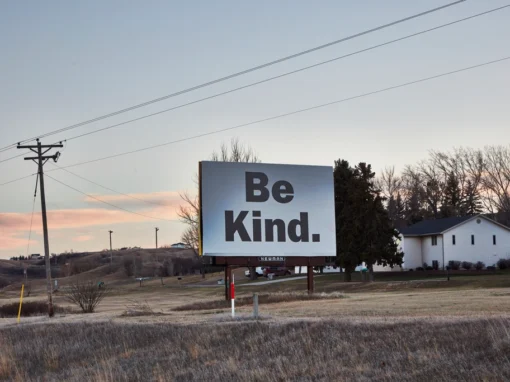
Frozen fields. Bare oaks. Dead elms. Late afternoon. 1985. You and I hold hands, walk into a biting wind.
I begin the day before it’s light, reading Try To Praise The Mutilated World, a poem by Adam Zagajewski translated from the Polish by Clare Cavanagh.
I begin the day grateful for a clear sky and no breeze.
And once again it’s about what is not here.
Not in the Guadalupe Mountains of Texas where I walked long ago.
Not in Stony Rapids, Saskatchewan, where Al has his place and there’s free wi-fi.
Not in the place of wild onions, the place of the great blue heron, of the hog-nosed skunk.
Not in the sound of the lake lapping gently over pebbles as we sit on boulders, wrapped against the March winds, drinking coffee from a flask that was a wedding present.
We wander into a church where ancestors are married and buried and where travelling painters brush on lime plaster and paint that will bond and dry into frescoes that will last a thousand years.
In a small Essex town where I lived long ago
a woman stoops to tie a shoe lace, worrying, hurrying.
She knows she is not welcome.
(It’s all most of us want, a place to feel welcome.)
If you sit at her kitchen table over a mug of tea and ask, she will tell you
We flew in a small plane, afraid of being followed, across a ploughed field above a train travelling south.
A government sentences a human rights lawyer to thirty-eight years in jail and one hundred and forty eight lashes.
What are we to do?
The woman takes a short-cut home.
An old man reaches a stile at the same time, smiles, lets her cross first, points out the pond where, when he was young, he swam every day it wasn’t iced over.
(One small moment of kindness, that’s all it takes.)
I catch a bus past the old concentration camp
past the outer margins of memory.
A cat sits on a high wall, watching song birds in a plum tree that needs to be pruned.
There are on-line brochures for pilgrimages to all kinds of holy places. You can take your pick. Food, too, is a tourist attraction. You can pay the earth for grilled lettuce on a base of locally-sourced seaweed sorbet.
Where are the missing?
In the Hotel Absurd two neatly-dressed women are cracking one-liners over cocktails.
My dear, everyone must rise to the heights of their incompetence.
She’s an open brook, you know.
My husband’s been diagnosed with delusion disorder. He thinks he’s real.
It’s like those monochrome documentaries of before the war
before the final solution.
It could be Vienna, it could be Prague. A different script.
Her mother worked during the day. Her grandmother read her stories.
The rabbi tells the young man
Get out of the city whichever way you can. The fire is coming.
We lie in each other’s arms on the mattress in the flat with frozen windows.
Bells ring to scare away the old year.
We watch snow begin.
What is understanding?
It’s the moment you step off the pavement
when you haven’t seen the cyclist, head down, going too fast.
Refugees walk and walk.
They try to speak but can’t.
Can I get them out, give them a home?
Not even the children?
The armoured trucks roll on.
A child looks through the iron bars of a gate.
Her father will not be found.
Meanwhile, in the town on the border, oblivious to the elderly who are fresh from the coach and eager to see the flower borders and to take tea, four girls cartwheel and do handstands on the grass in the spring sun near the last remaining bit of moat from when the housing estate on the hill was a castle. The girls give each other marks out of ten. The elderly, in their warm coats, walk to the cafe behind the cathedral past the stonemason and his bored apprentice. It’s gone so cold suddenly. The Venerable Bede surprises the waitress by ordering a coconut cappuccino – large, if you please, oh and a pot of Earl Grey for my friend when he arrives. Friar Tuck is busy with his i-pad playing inside right for Nottingham Forest but it’s snowing now and he worries his game will be called off. He munches on a blueberry muffin. We all go a little mad sometimes, explains King John in the threadbare suit heading for the pub.
A girl who lives in an attic room is on the train to work.
She looks at brown and cream painted village stations
where banks of blackberries grow wild.
Life picks up speed, then suddenly brakes as the signals change.
She hopes she’ll find time to ring her new boyfriend on the office phone
(for this, again, is 1985.)
Stop what you’ve done well for years, don’t explain why.
Ambition is really just what you think you need.
And the people cheer and whoop it up.
And a government goes on felling forests.
And the people cheer and whoop it up.
Look, a bonfire up there among the honeycombs of the sandstone cliffs -or it is out to sea?
Ash heaps in the rain, a mother pushing home a pramload of coal.
A man complains to the council that his neighbour’s new fence is the wrong shade of green.
A cat on a cold felt roof.
And the women are still in the hotel lounge drinking cocktails.
Darling, she has a considerable back catalogue. One arrived in a municipal Daimler on a rainy morning with vintage brandy and organic apricots.
…What did I do for money? Before the writing stint, you mean? Well, I avoided the mine, where they took us on a school trip (only the kids from the wrong side of the by-pass, mind) and the factories, where my father and brother worked. Picked potatoes (where I fell in love with identical twins but couldn’t tell one from the other), cleaned the school after the day’s classes, delivered newspapers, humped stuff around a building site, oh and worked nights measuring the flow of sewers in Raunds, Northamptonshire, up and down manholes, with a break every hour for a mug of strong tea and a digestive biscuit.
A woman who clambers on to the train has a lampshade sticking out of the top of her rucksack. She is crying. It will take four days to reach Baku, Azerbaijan.
A government sprays the people it is supposed to serve with clouds of sarin.
Your head pounds, your eyes and lungs feel full of water…
Body parts lie among the rubble in the streets.
And the busker outside the tourist office sings in Arabic
Freedom’s just another word for nothing left to lose and nothing aint’ worth nothing but it’s free
Holidays are lovely. We go when we can, just the two of us now the children are grown.
Your parents spent their honeymoon here, walking up and down the long prom, palling up with Chas and Vi, with Lil and Ern (who died young), with Babs and Bill.
They didn’t want children too soon, you said. Wanted to save for a house first, even if it took the rest of the ’50s to do it. And it did.
It feels good to walk where they walked.
We hear them laughing as they throw balls about on the beach.
I flew to Geneva, caught a bus to Annecy.
I flew to Zurich, caught a train to Dornbirn.
I flew to Bilbao, hitched a ride to Miranda.
I flew to New York, drove south to Atlantic City, Ocean City.
And there I am, in my room high in the Seelbach Hotel on South Street, Louisville, watching the tornado twisting towards us…
I thank eternity and all its stars that, wherever I was, I let nobody into my room and, as far as I could, avoided physical contact.
Discipline, you say? Maybe. More likely fear of who I might become.
I was there to write.
Why?
I don’t know.
And yet who are you who walks with me in dreams?
A sunny day, a tall and slender girl in a blue top under a long white cotton shirt – is that mine? I think it is – you talk about poetry, say, oh, it’s not much and kiss my cheek. We walk through a field, arms around each other’s waists. Who are you?
One mountain spring can create an ocean.
One day, without moving from here, I shall look out upon the sea.
A woman throws a love-letter from a window, watches it float four storeys to the wet street. Now she turns, fills the kettle, puts it on the hob, spoons instant coffee into her mug.
And more dreams roll in with the April mist:
Poor old Nabakov’s had enough of hunting butterflies, is about to fire his latest protege, who is standing by the cream telephone box (for this is Hull) in a PVC raincoat filing her glossy pink nails. Chaucer’s go-karting at Southport, uncomfortable in his two-sizes-too- small pin-striped suit.
Look up. On a clear night, asleep or awake, then or now, we see the same stars.
Wilfred’s mother reads again and again his last letter. There’s no danger here.
Duran’s bar in Manhattan, remember? Where the beer was cheap and conversation long. (Ah, but we were young then, our lifelines strong.)
I’m less competent by the day. I fall over in the bathroom, hit my back on the rim of the bath. And I spend time thinking who decided red would mean stop and green go.
There is no Planet B, says my grandson’s sign, as at the age of ten he takes the rest of us on his small shoulders.
To avoid Shakespeare’s Birthday celebrations, Stratford-upon-Avon prises itself out of the middle of the country, pops up into the air like a cork, flies across Europe. Others are off, too, air routes are filled by towns from all over the world going this way and that with no particular plan. It’s great. Everybody’s so happy. Who will come to rest in the hole that Stratford left? How about Salekhard, Siberia? That might fit. Or somewhere warmer and drier, perhaps. El Oued, Algeria. That will do it.
The stasi kept a file on Katarina Witt from the age of eight.
What happened to the girl peering through the gate?
The maids are silent at the kitchen table eating leftovers.
And the people cheer and whoop it up.
And governments permit the destruction of homelands of gorillas, penguins, polar bears.
And the people cheer and whoop it up.
Go downstairs, look out into the garden where two cats doze in the spring sun.
Yes, there are days when you stand on the cliff-edge and curse the storm.
You are convinced it sings to you, foul-mouthed, with arms flailing.
No, no, it’s not like that. It never was.
I see a man sorting through the bin of a restaurant.
Like a crow caught on the road pulling at carrion, he turns his head towards me, stands still for a second or two. A chunk of pizza hangs from the side of his mouth.
Outreach workers bend to talk to a girl in a sleeping bag.
A woman rides the night bus for company.
Welcome to the archives, take a seat, everything you are is on the shelves.
Welcome to collapsed bones in your neck, twisted knees.
Welcome to heart disease.
Welcome to the memory of bellringers high in the tower, boozing it up, roaring their jokes, ringing the bells when they feel like it and not to order.
Out of the earth and the air we grow, into the earth and air we fall, and grow again, fall again, down through the spinning, spiralling centuries, picking up knowledge as we go and casting knowledge aside.
In the rain, in Somerset, perhaps, or just another dream
we sit on a bench, you and I, not needing to speak.
The bench has an inscription Use Your Time Wisely, Rest Here Awhile.
We made it, you know, we really did.
Meanwhile, with a government-issue scalpel a doctor goes about his intricate business,
saving those it is possible to save.
And the doctor knows his fate. Not when but how.
His details are already being compiled.
Everything we do is on a spreadsheet.
And the people cheer and whoop it up.
And the people cheer and whoop it up.
When night falls, as we walk in the frozen field (bare oaks, dead elms, a biting wind) the rarest of things: a crow flying through the dark, making its triple call.
In the morning we help each other to the top of Glastonbury Tor, from where you can see Wells Cathedral and Hinkley Point Nuclear Power Station.
Without you, sings Nilsson. Without you in another time
I sit on a bus with a girl. We weren’t lovers like that.
Was it more than that? you ask.
If you drive through Dead Horse Canyon you can go all the way to Split Rock lighthouse without seeing a soul.
And that new year’s eve she danced the grizzly bear near the memorial to drowned sailors.
It’s 1945. The woman gets off at every station on the way to the city, wonders what next. And every time she gets back on the train.
She imagines her late and much-loved husband standing by the window in the dark of the carriage, looking out at the lights of the towns and villages, trying to ignore the end of the line.
If you make mistakes, retrace your steps and try again.
The only sounds the flickering of the coal fire, the ticking of the clock in the hall, the patient darning of socks.
My mother, who appears only rarely now, welcomes carol singers but expects at least three carols for her money and all the verses, and gives them what for if they knock on the door after two.
By the 70s the Christmas tree that comes down from the loft every year is threadbare
and the fairy lights a risk.
In the airport lounge
Dr Who walks to the desk, stooping slightly, older, taller,
a patch of tissue jammed into one ear.
Do you know if the flight to Newcastle is delayed?
Nobody does.
It’s East Germany, I drive
from Bayreuth to Leipzig and on to Magdeburg, four hours, five with a stop for petrol
and weak coffee. In time all borders move. Land rises, falls, shrinks, expands.
I write and am paid. What more is there to know?
Now you are with me, I with you.
In Vienna we pour the coffee we bought especially to drink in our room
instead of the dried-up powdery sachets provided by the hotel.
We look out as snow settles on the thick branches of beeches.
We’ll adjust our plans, maybe curl up and read our books.
The boat to Bratislava is not a good idea in winter.
In the Ischian hills under lemon trees old women play whist ferociously,
caddis flies are caught by shafts of sunlight on the edge of a pond.
The light wind steers the clouds inland, east then north,
as the heat brings lizards on to bright walls.
For centuries yet, explorers will go on finding previously undiscovered species of fish.
Sometimes we all need to hide, or keep on the move.
An organ, discordant, in a vast church.
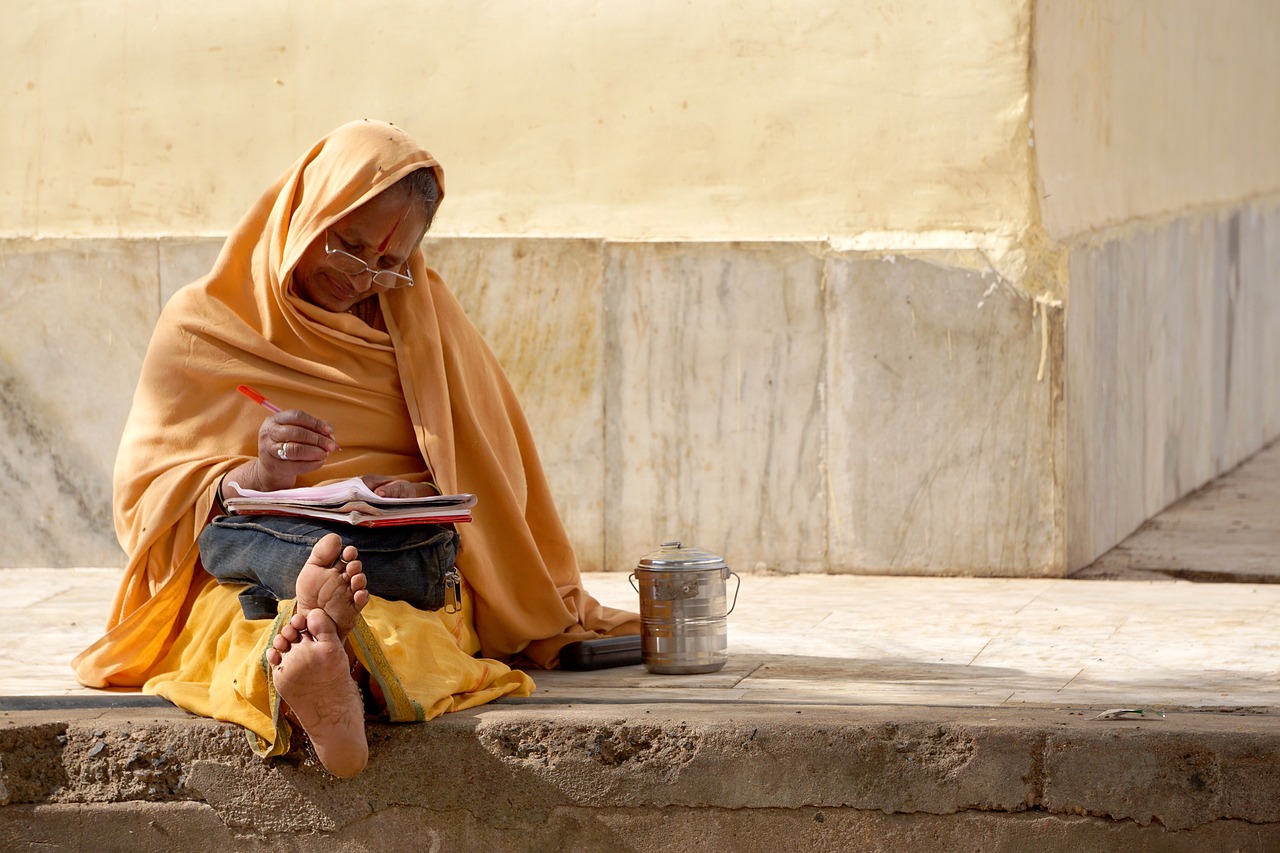
The woman who is unwelcome takes temporary sanctuary, prays to her mysterious god.
The woman goes outside to the graveyard, leaves a photograph of a child
by the headstone of a man, says softly Here she is, my love.
If you refuse to believe the government’s lies
they will take your fingerprints, remove
your jewellery, your belt, your shoes.
If you understand the fate of ordinary people
depends on who bribes who and how much
there will be no way back
but if you’re lucky you will hear
a foghorn down in the bay
and the girl in the house over the back
playing Nightswimming on the piano.
And the people cheer and whoop it up.
And the people cheer and whoop it up.
Let’s go on, then, you and I… for as long as they let us, and then some.
Frozen fields. Bare oaks. Dead elms. Late afternoon. 1985. You and I, holding hands, walking into a biting wind…